
Japandi. By blending the functional minimalism of Scandinavian design with the rustic, soulful philosophy of Japanese Wabi-Sabi, Japandi has become more than just a trend—it is a lifestyle.
At LargeWallart, we have seen a massive surge in demand for pieces that anchor these spaces. But why exactly is Japandi style dominating the decor world in 2025?
The Intersection of Functional and Soulful
The term "Japandi" is a portmanteau of Japan and Scandi. While they come from different sides of the globe, both cultures share a deep respect for nature, craftsmanship, and simplicity.
Scandinavian design brings "Hygge"—a sense of cozy comfort and clean lines. Japanese design brings "Wabi-Sabi"—the appreciation of imperfection and the passage of time. When these two collide on a canvas, the result is often a stunning piece that feels both modern and ancient, structured yet organic.
Why Texture is the Bridge Between Scandi and Japanese Decor
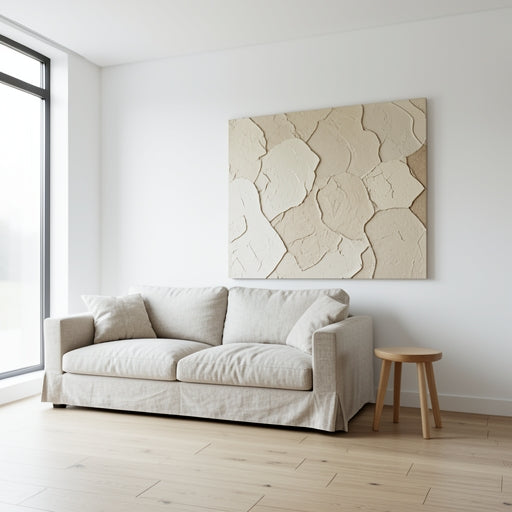
In a Japandi home, walls are rarely left completely bare, but they are never cluttered. The goal is "warm minimalism." This is where a high-quality becomes the hero of the room.
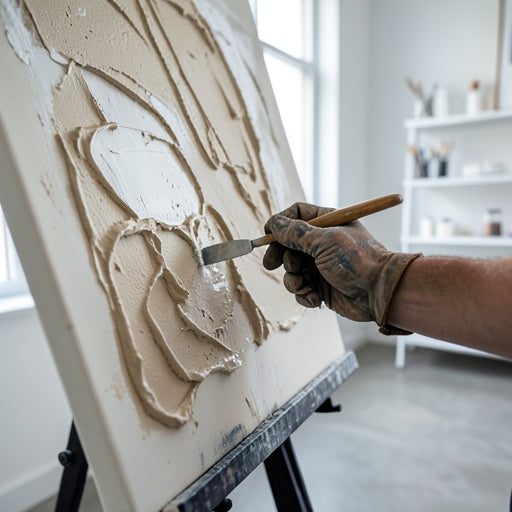
Unlike flat, mass-produced prints that can feel cold or industrial, a hand-painted textured canvas adds tactile warmth. The physical ridges of the paint catch the light, echoing the natural materials like wood and stone that define Japandi interiors. It provides a focal point that is visually rich without being "noisy."

Creating a Japandi Palette with Neutral Art
The Japandi color palette is famously restrained. It leans heavily on "greige" (gray-beige), muted ochre, sage green, and charcoal. Our artists specialize in these earthy, neutral tones, ensuring that each piece complements the light-colored woods (like oak or ash) typically found in Nordic furniture.
If you are looking to transform your space, starting with a large-scale minimal abstract piece is the most effective strategy. A well-placed oversized painting can instantly harmonize a room, bridging the gap between sleek furniture and the raw, organic beauty of the natural world.
FAQ: Styling Your Japandi Space
What kind of frames work best for Japandi art?
For a true Japandi look, we recommend "floater frames" in natural oak or light wood. However, many of our collectors prefer the unframed, gallery-wrapped look to emphasize the raw texture of the edges.
Can I use colorful art in a Japandi interior?
While Japandi leans towards neutrals, you can certainly use muted "earth tones." Think terracotta, deep forest green, or midnight blue. Avoid neon or overly vibrant primary colors to maintain the serene atmosphere.
How do I choose the right size?
Japandi is about balance. For a living room, a piece that covers roughly 2/3 to 3/4 of the width of your sofa is usually the "sweet spot" for visual harmony.
Conclusion: Finding Balance in 2025
As we move through 2025, the need for a calm, balanced sanctuary at home has never been greater. Japandi style offers exactly that—a harmonious blend of northern efficiency and eastern soul. By selecting the right Japandi style wall art